
If your organization treats Commissioning and Qualification (C&Q) as something that happens after construction is complete, you’re not alone. But you’re also leaving significant value on the table, and exposing your projects to avoidable risks by not embedding C&Q into your project from day.
Commissioning and Qualification (C&Q) represents one of the most critical, and often mismanaged, phases of pharmaceutical manufacturing facility projects. For pharmaceutical manufacturers seeking FDA approval, GMP compliance, and operational efficiency, the timing of C&Q integration can mean the difference between on-time, on-budget success and costly delays. At Sequence Inc., our 23+ years of pharmaceutical commissioning and qualification consulting experience has revealed a consistent pattern: integrated C&Q approaches deliver faster qualification timelines and eliminate potentially millions in rework costs compared to traditional bolt-on methods.
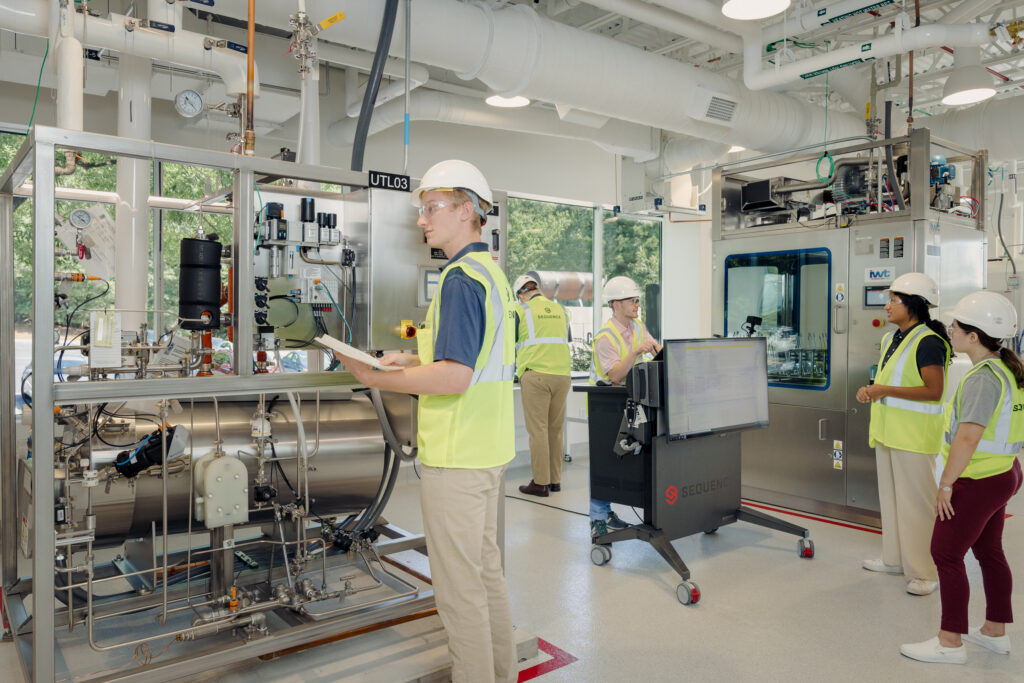
THE REAL COST OF LATE STAGE COMMISSIONING AND QUALIFICATION IN PHARMA PROJECTS
Most organizations understand that C&Q is important. The problem isn’t whether it gets done, but when it enters the conversation.
Consider the typical scenario: Engineering designs the systems. Procurement sources the equipment. Construction installs everything. Then, often under schedule pressure, the C&Q team arrives to “qualify what’s been built.”
Developing a systematic approach to prevent these scenarios is critical. When C&Q is brought into projects during the design phase, not after construction, we consistently see reductions in qualification timelines and significant cost avoidance from eliminated rework.
Here are some of the problems that come into play with a typical sequential handoff approach:
Design decisions are made without qualification in mind. Equipment specifications that looked perfect on paper turn out to be difficult or impossible to qualify cost-effectively. User Requirements Specifications (URS) get drafted without input from the people who will ultimately need to demonstrate those requirements are met.
Rework and retrofits occur more frequently. When qualification reveals gaps, the options are limited and expensive. Modifying installed equipment, adding instrumentation after the fact, or worse, living with systems that don’t quite meet requirements, all stem from late C&Q involvement.
Compressed timelines and quality compromises become an issue. When construction runs over schedule, C&Q inherits the delay. Protocols get rushed. Testing becomes a race against startup deadlines. Documentation quality suffers. And everyone hopes the auditors don’t notice.
Knowledge loss occurs at handovers. Critical design decisions and rationale get lost in the gaps between phases. The C&Q team is left piecing together why things were done a certain way, if they can figure it out at all.
One Sequence project lead put it bluntly:
“Eighteen months were spent designing and building the facility, then it was discovered in three weeks of qualification that choices were made that created permanent limitations. We could have avoided every one of those issues with two hours of C&Q input during design reviews.”
Sequence Project Lead
20+ Years Pharmaceutical C&Q Experience
WHAT COMMISSIONING & QUALIFICATION INTEGRATION ACTUALLY MEANS FOR YOUR PROJECT
Integrated C&Q isn’t about having qualification specialists review final construction drawings. At Sequence, we define integration as embedding C&Q thinking, planning, and expertise throughout the entire project lifecycle, from concept through to operational handover. Our cross-functional training approach ensures our consultants understand not just qualification, but how manufacturing, utilities, lab systems, and IT infrastructure interact. This holistic perspective is what allows us to provide valuable input that ensures both compliance and efficiency from conceptual design through licensure.
Here are some of the ways that early integration of Sequence engineering consultants can support your project:
Commissioning & Qualification participation in proposal and feasibility phases. Before you commit to a project approach, C&Q should inform scope definition, man-hour estimates, and schedule planning. This ensures realistic timelines and prevents the “we’ll figure out qualification later” syndrome that leads to unpleasant surprises.
Commissioning & Qualification input during design development. Qualification strategies should influence equipment selection, instrumentation design, and system architecture. When C&Q reviews a P&ID at 30% design instead of 100% completion, specification changes cost thousands instead of millions.
Qualification strategy driving procurement. Factory Acceptance Testing (FAT) shouldn’t be an afterthought. Integrated C&Q means qualification requirements are part of equipment specifications, and FAT protocols are reviewed before purchase orders are issued—not scrambled together after equipment arrives.
Parallel planning during construction. While construction proceeds, C&Q develops protocols, identifies long-lead testing requirements, and coordinates with operations on resource needs. This transforms C&Q from a sequential phase into a parallel work stream.
Seamless transition to operations. When C&Q is integrated from the start, the handover to operations isn’t a cliff—it’s a bridge. Documentation is complete, knowledge transfer is ongoing, and operational readiness is verified, not assumed.
STRATEGIC BENEFITS OF EARLY COMMISSIONING & QUALIFICATION INVOLVEMENT
Organizations that have successfully integrated C&Q experience compelling benefits:
Reduced project timelines. Counterintuitively, involving C&Q earlier accelerates overall delivery. One large pharmaceutical manufacturer tracked a 20% reduction in qualification phase duration on integrated projects compared to traditional approaches. Why? Because issues were identified and resolved when they were easy and cheap to fix.
Lower total project costs. While integrated approaches may show higher costs in early phases, total project expenditure decreases. Avoiding rework, reducing schedule compression, and eliminating late-stage design changes more than offset the investment in upfront C&Q involvement.
Improved regulatory outcomes. Facilities delivered through integrated C&Q consistently show better inspection results. When qualification is built into the process rather than bolted on afterward, regulatory compliance becomes inherent, not inspected in.
Higher operational performance. Systems that are designed with qualification in mind tend to be easier to operate, maintain, and troubleshoot. They start up faster and reach stable operation sooner—because the operational reality was considered from the beginning.
Organizational learning and capability building. The Sequence Integrated approach to commissioning and qualification creates knowledge-sharing between C&Q specialists and project teams. Engineers learn to think about qualification. C&Q professionals gain deeper understanding of design and construction realities. The entire organization becomes more sophisticated.

OVERCOMING BARRIERS TO INTEGRATED C&Q IMPLEMENTATION
If integrated C&Q makes so much sense, why isn’t everyone doing it?
At Sequence, we’ve solved this through flexible engagement models. You don’t need full-time C&Q staffing from day one, you need the right expertise at the right touchpoints. Our consultants can provide focused design reviews, risk assessments, and strategy development during critical early phases, then scale up for execution. This approach actually reduces total C&Q hours by eliminating rework. We’ve built our business model around right-sizing C&Q involvement to maximize value without overloading your budget in early phases.
The obstacles are real but surmountable:
“We don’t have C&Q resources for early phases.” This is a resource allocation problem, not a resource availability problem. The same C&Q hours will be spent either way, the question is whether they’re invested proactively or spent reactively. Leading organizations have solved this by right-sizing early C&Q involvement (focused reviews, not full-time staffing) and demonstrating the ROI to secure dedicated resources.
“Our EPCM partners don’t understand pharma C&Q.” Then educate them, and make C&Q integration a contract requirement. Some organizations have successfully embedded pharma C&Q specialists within EPCM teams. Others have created clear interfaces and review gates. The key is making C&Q expectations explicit from the RFP stage.
“Project managers don’t see the value.” This is a leadership communication challenge. When executives make integrated C&Q a project success criterion, measured and rewarded alongside cost and schedule, project managers adapt quickly. What gets measured gets managed.
“It slows down design.” This concern usually reflects past experience with C&Q as a sequential approval gate. Integrated C&Q should accelerate design by providing real-time feedback, not bottleneck it with after-the-fact reviews. If C&Q integration is slowing things down, the process needs refinement, not abandonment.
HOW TO IMPLEMENT INTEGRATED COMMISSIONING AND QUALIFICATION: PRACTICAL FIRST STEPS
Integrated C&Q isn’t about having qualification specialists review final construction drawings. At Sequence, we define integration as embedding C&Q thinking, planning, and expertise throughout the entire project lifecycle, from concept through to operational handover.
Our cross-functional training approach ensures our consultants understand not just qualification, but how manufacturing, utilities, lab systems, and IT infrastructure interact. This holistic perspective is what allows us to provide valuable input that ensures both compliance and efficiency from conceptual design through licensure.
Engaging Sequence: How and When to Bring Us In
Knowing when and how to engage the right partner is just as critical as understanding why integration matters.
Sequence provides value at three key phases:
- Front-End Strategy & Feasibility (Concept to Design Freeze):
Engage Sequence early, even before design is locked, to define your qualification strategy, risk-based scope, and initial resource plan. A brief advisory engagement during this stage can uncover cost drivers and establish a defensible C&Q roadmap aligned with the overall project execution plan.
- Design & Procurement Phases:
Our consultants participate in design reviews, user requirement definition, and vendor FAT planning. These targeted touchpoints are where Sequence input saves the most time and rework cost. Engagements here often take the form of part-time design review support or dedicated engineering liaisons within your EPCM team.
- Execution & Handover (Construction through Startup):
As systems come online, Sequence scales up to provide commissioning management, field execution, documentation, and coordination support. Because we helped shape the qualification plan earlier, field execution runs smoothly, with clear deliverables, consistent documentation, and confident regulatory readiness.
Engagement Models:
Whether you need advisory input, embedded team members, or turnkey C&Q execution, Sequence offers flexible models to match your project’s size and maturity:
- Strategic Consulting Engagements for early planning and roadmap development.
- Embedded C&Q Advisors integrated into EPCM or owner teams.
- Full Lifecycle Delivery Support managing C&Q planning, execution, and readiness.
Each model is designed to right-size C&Q involvement, delivering the expertise you need, precisely when it adds the most value.
How to Implement Integrated Commissioning and Qualification: Practical First Steps
Transforming your project delivery model doesn’t happen overnight, and you don’t have to build internal C&Q capabilities from scratch. Sequence can help you navigate the transition.
Here’s how to begin:
- Pilot integrated C&Q on a strategic capital project and capture performance metrics.
- Define C&Q engagement touchpoints early in your project planning and update RFP templates accordingly.
- Train or partner with experienced C&Q specialists to guide EPCM teams.
- Embed C&Q readiness indicators within executive dashboards and project governance.
Leverage Early Commissioning and Qualification with Sequence’s Proven Approach
The late-stage approach to commissioning & qualification persists because it’s familiar and because the costs are often invisible until late in the project. Integrated C&Q requires upfront intention and partnership. But organizations making this shift are discovering what Sequence has proven across hundreds of projects: quality can’t be inspected in, and qualification can’t be bolted on.
The question isn’t whether your next facility will need to be commissioned and qualified, it will. The question is when you’ll bring in the expertise to make that process efficient, compliant, and value-creating.
Contact Sequence early in your planning process, not after design decisions are set, to ensure your next project starts qualified, not just ends that way.
Ready to Transform Your C&Q Approach?
Find out more at Info@SequenceQCS.com